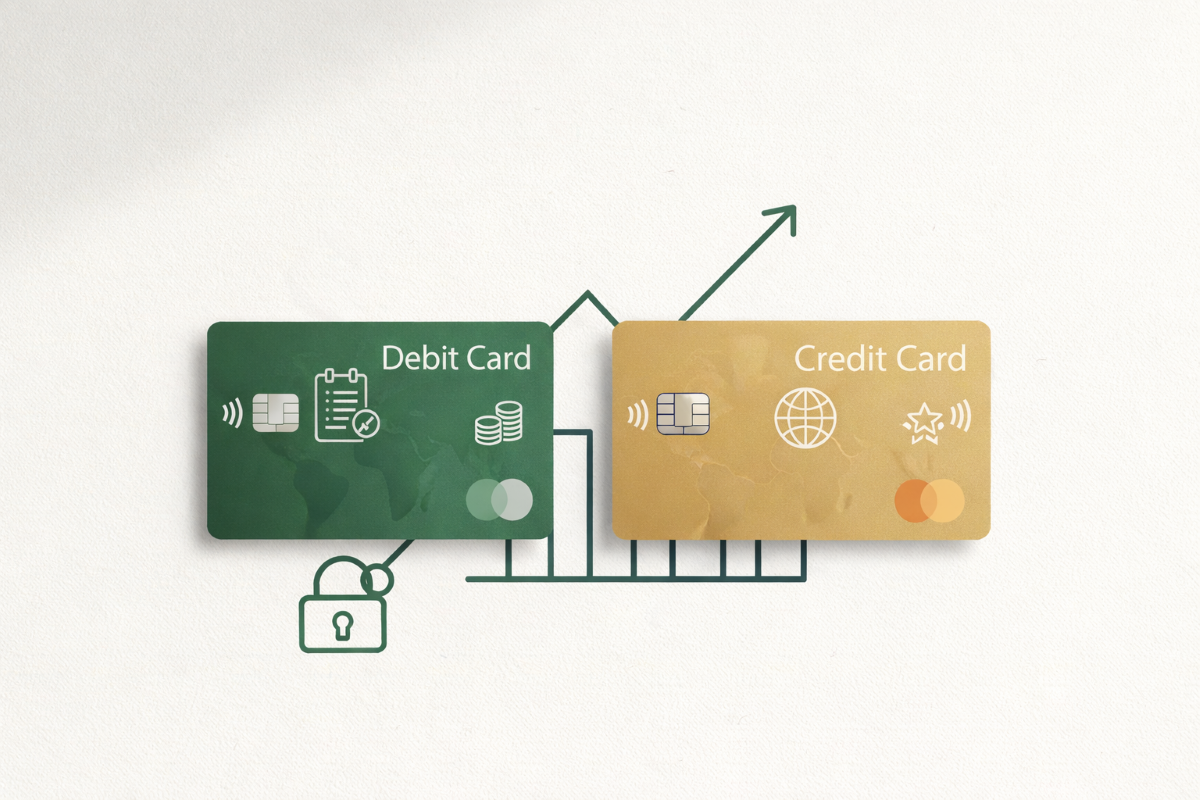
Debit and credit cards are part of everyday life. From groceries to subscriptions, most of your daily transactions happen through one of them. While they look similar and are accepted in the same places, the way they work behind the scenes is very different.
Understanding how both cards work can help you choose the right one for different situations and avoid unnecessary fees or stress.
Here’s a simple breakdown with examples:
What happens when you use each card
When you use a debit card, money leaves your checking account almost immediately. If there’s $500 in your bank account, that’s your spending limit. To spend more than that, overdraft protection must be turned on.
When you use a credit card, nothing leaves your bank account right away. You’re borrowing money from the card issuer, and the bill is generated later.
Pocket Dimes takeaway:
Debit = now money
Credit = later money
Pocket Insight: Overdraft Protection
Overdraft protection lets a transaction go through even when your balance is low. Banks usually charge an overdraft fee, which must be repaid within the timeline set by the bank.
Why do debit cards feel safer for beginners
With a debit card, you can’t spend more than what you have (unless overdraft is enabled). That natural stop can protect you from accidental overspending.
With a credit card, the spending limit is often higher than your available cash. Without careful tracking, it’s easier to spend more than you planned.
Pocket Dimes takeaway:
Debit keeps spending visible.
Credit requires self-control.
Credit score: Where debit cards stop helping
Using a debit card doesn’t build your credit score. It also can’t hurt your credit, because debit cards aren’t tied to a credit line. Opening a bank account is usually easy and doesn’t require strong credit history.
While credit cards work differently. Every month you use one:
- On-time payments help your credit
- Late payments hurt it
Pocket Dimes takeaway:
Debit is neutral.
Credit leaves a record.
Interest: Quiet difference many people miss
Debit cards don’t charge interest. If the money is gone, it’s gone.
Credit cards charge interest only if you don’t pay the full balance. Over time, that interest can add up quickly.
Pocket Dimes takeaway:
Credit cards are cheap when paid on time and expensive when they’re not.
How rewards work on debit vs credit
Debit cards usually don’t offer rewards.
Credit cards often do offer cash back, points, or miles. But rewards only matter if you pay your balance in full. Carrying a balance can cancel out the benefit.
Pocket Dimes takeaway:
Rewards are a bonus, not a reason to overspend.
Fraud protection differences
If fraud happens on a debit card, it’s usually your money that gets tied up while the issue is resolved.
With credit cards, disputed charges are typically not paid by you while they’re under review.
Pocket Dimes takeaway:
Credit cards give more cushion during fraud issues.
Cash access: Where debit clearly wins
Debit cards are designed for ATM withdrawals.
Credit cards do allow cash advances, but they usually come with high fees and immediate interest rates, making them expensive and generally not recommended.
Pocket Dimes takeaway:
Need cash? Debit
Need flexibility? Credit
So, which one is better? There isn’t a single winner and that’s the point.
Debit cards and credit cards are built for different purposes. Debit cards help you spend money you already have and keep your spending visible. Credit cards offer flexibility, protection, and a way to build credit but only when used carefully.
The real advantage doesn’t come from choosing one over the other. It comes from knowing when to use each.
- Use debit cards for everyday spending, cash withdrawals, and staying within a set limit.
- Use credit cards for purchases where protection matters, for building credit, and for rewards while paying balances on time.
Having both cards gives you options and learning their differences helps you avoid fees, reduce stress, and stay in control of your money.
Pocket Dimes takeaway:
Debit and credit aren’t good or bad.
They’re tools. And like any tool, they work best when used wisely.